 By Hannah Grace - February 02, 2026
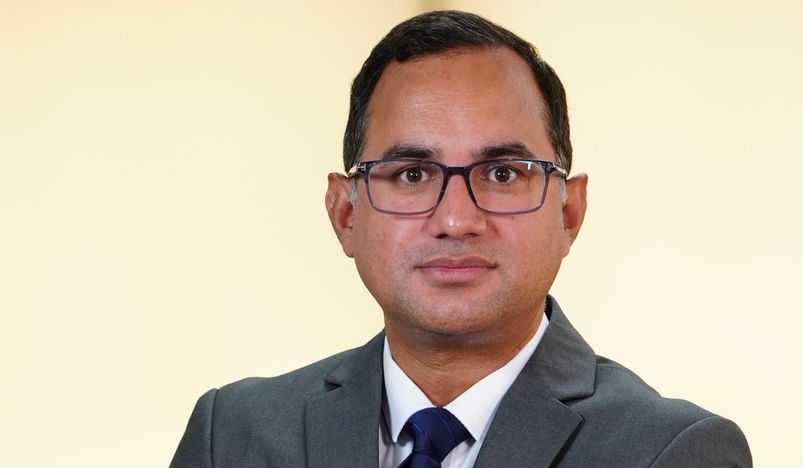
Rahul Arya, CEO of Artefact
Rahul is the CEO of Artefact MENA, Southeast Asia, and India, bringing over 20 years of global experience in strategy and management consulting across the GCC, Europe, and the United States. Prior to Artefact, he built a distinguished career at McKinsey & Company, advising leading organizations on growth, transformation, and data-driven decision making.
An alumnus of the Indian Administrative Services (IAS), Rahul has also served as an advisor to the Government of India on public policy, with a focus on economic development, artificial intelligence, and data. His unique blend of public sector insight and private sector execution enables him to bridge policy, technology, and business impact.
Rahul is a trusted advisor to CEOs and Director Generals of major corporates and government entities, with long-standing relationships forged through the successful delivery of large-scale data transformation programs and digital and data marketing activations that generate measurable business outcomes.
He has led engagements across a wide range of sectors including Government, Travel & Tourism, Retail, CPG, and Real Estate. His client portfolio includes leading organizations such as Nakheel, Aldar, Damac, Wasl, Dubai Tourism, STC, and Ooredoo Group.
Under Rahul’s leadership, Artefact continues to strengthen its position as a global leader in data and AI-driven business transformation.
Interview with Rahul Arya at Web Summit 2026:
Qatar has made clear strides toward building a diversified, knowledge-based economy. From your experience across the GCC, Europe, and the US, what sets the Qatari market apart when it comes to executing large-scale transformation rather than simply articulating ambition?
From my perspective, the Qatari market is a compelling case study in how to convert vision into impact at scale.
The number one differentiator is the singular clarity of Qatar’s national vision, which translates into institutional strength and decisive execution in a way that few markets globally manage to sustain over time. Unlike environments where transformation becomes diffused across competing agendas, Qatar National Vision 2030 sets clear benchmarks and provides a foundational roadmap. This enables government entities and private sector partners to make sustained, multi-year investments in technology, data infrastructure, and human capital with a high degree of confidence.
The results are tangible. Qatar now ranks 5th globally in the Telecommunications Infrastructure Index, underscoring the strength of its digital backbone. Additionally, under the Qatar Digital Agenda 2030, the digital economy is expected to contribute a cumulative QR40 billion (around $11 billion) to national GDP, with targets that include automating up to 90% of government services (around 1,500 services) by 2030.
Another factor that truly sets Qatar apart is its ability to seamlessly bridge public policy with private sector execution, which is critical for driving large-scale change. You can see this clearly today in Doha hosting Web Summit Qatar, a premier global technology event that generated an estimated QR807 million (over $220 million) in economic returns in 2025 alone. All of this significantly strengthens Qatar’s innovation ecosystem and its global connectivity.
This institutional commitment to long-term, data-driven transformation is also reflected in how public entities engage with partners on foundational work. For example, at Artefact, we are currently supporting a Qatar government entity in re-engineering its statistical production processes and migrating them to the cloud, not as a one-off technology upgrade, but as a structural shift toward more scalable, reliable, and insight-driven decision-making.
You have advised both government entities and leading private-sector organizations across sectors such as tourism, real estate, telecom, and retail. Where do you currently see the strongest convergence between national priorities and commercial opportunity in Qatar?
The strongest convergence is in the twin pillars of Digital & AI-Driven Economic Diversification and Tourism/Mega-Event Activation. National priorities are focused on building a resilient, knowledge-based economy, and the commercial opportunity lies in the data-driven transformation of core sectors.
Apart from its contribution to the national GDP, the Qatar Digital Agenda 2030 aims to create around 26,000 jobs in the ICT sector by 2030, supporting the country’s transition to a knowledge-based economy.
In Tourism and Real Estate, the national focus on global positioning creates significant opportunities for organizations that can leverage data and AI for hyper-personalized customer experiences, predictive urban planning, and optimized large-scale assets. A standout moment was the FIFA World Cup 2022, which generated $20 billion in economic impact, while ongoing tourism initiatives are projected to attract 6–7 million international visitors annually by 2030, increasing the sector’s contribution to GDP to 12%.
Developments such as Lusail City and The Pearl-Qatar are already leveraging AI and data analytics to optimize urban planning, manage large-scale assets, and enhance customer experiences, enabling investors and operators to align with national priorities in tourism, lifestyle, and international appeal.
Telecom and government service providers act as enablers of this transformation. For example, a focus on digital channels resulted in a 700% increase in eCommerce sales and a 43% cost saving on paid search for Ooredoo Qatar. Telecom operators, including Ooredoo and Vodafone Qatar, have deployed 5G networks nationwide, supporting data-intensive AI applications in retail, smart cities, and predictive analytics, thereby advancing both private-sector innovation and national efficiency goals.
Artefact's expertise spans the entire value chain for these sectors, and our work with the Qatar Government directly supports the core national statistical infrastructure required for data-driven economic monitoring and decision-making.
From our side, our expertise spans the entire value chain for these sectors, and our work with the Qatar Government directly supports the core national statistical infrastructure required for data-driven economic monitoring and decision-making, complementing the broader ecosystem of digital transformation across government and industry.
Having worked closely with CEOs and Director Generals on growth and transformation agendas, what leadership capabilities are most critical today for organizations in Qatar seeking sustainable, long-term impact?
The most critical capability is what I call 'Visionary Execution': the ability to balance the long-term vision with the granular, day-to-day execution of data transformation. It requires a leadership team that is not just a sponsor of AI and data, but an active participant. Leaders must cultivate a culture that treats data as a strategic asset, ensuring that investments in AI are directly tied to measurable business outcomes. This means moving beyond pilot projects to successfully scaling solutions and activating data across the entire organization to deliver sustainable, long-term impact. As Google’s Cloud Partner of the Year 2025 and a recognized AI player with hyperscalers like Microsoft and sovereign cloud providers, Artefact operates at the cutting edge of this vision, helping organizations establish robust, scalable data and AI foundations that support both strategic goals and operational execution.
Qatar’s development model is often characterized by long-term vision and institutional strength. How can organizations balance this with the need for speed, adaptability, and measurable outcomes in an increasingly competitive regional environment?
The balance is achieved through agile institutionalism. The institutional strength provides a stable, long-term runway, but organizations must adopt an agile operating model and a test-and-learn mindset to inject speed and adaptability. This involves:
Web Summit Doha has quickly become a key platform for regional and global dialogue on technology, innovation, and AI. From your perspective, how valuable are forums like this in moving conversations in the region from experimentation to real-world business and public-sector impact?
Forums like Web Summit Doha are immensely valuable. They serve as a critical accelerator for knowledge and partnership ecosystems. They move the conversation from siloed experimentation to real-world impact in three ways:
While artificial intelligence continues to attract significant attention, many organizations struggle with practical adoption. In the context of Qatar and the wider GCC, where do you see AI delivering the most tangible value today—and where should leaders remain cautious?
AI is delivering the most tangible value today in areas that are data-rich and directly affect the bottom line and citizen experience:
As Artefact continues to expand globally, how strategic is Qatar and the wider GCC to your growth plans, and what role do partnerships, ecosystems, and regional platforms play in shaping long-term value creation?
Qatar and the wider GCC are absolutely strategic to Artefact’s global growth plans. This region is not just adopting data and AI, it is setting the global pace for large-scale, country-level digital transformation. Our experience in bridging policy, technology, and business impact, particularly with major government and corporate entities, is a direct fit for the region’s ambitions. With over 300 employees and seven offices in the MENA region, including one in Qatar, Artefact has a strong local footprint to support this growth. Partnerships, especially with local champions and technology providers, are fundamental. They enable us to localize our global expertise which spans the full spectrum of Data Strategy, AI Acceleration, and Digital Marketing, contribute directly to the national knowledge economy, and create sustainable, long-term value by building capabilities within our clients, not just for them.
By Hannah Grace - February 02, 2026.jpg)
Qatar Secures Place Among the World's Top 10 Wealthiest Nations
.jpg)
Hamad International Airport Witnesses Record Increase in Passenger Traffic

Saudi Arabia: Any visa holder can now perform Umrah

What are Qatar's Labour Laws on Annual Leave?



.png)
.png)
.png)
.jpg)
.jpg)
.jpg)
.jpg)
.jpg)



.jpg)

.jpg)
.png)
.jpg)











Leave a comment