


 By Roysten Xavier - July 05, 2026
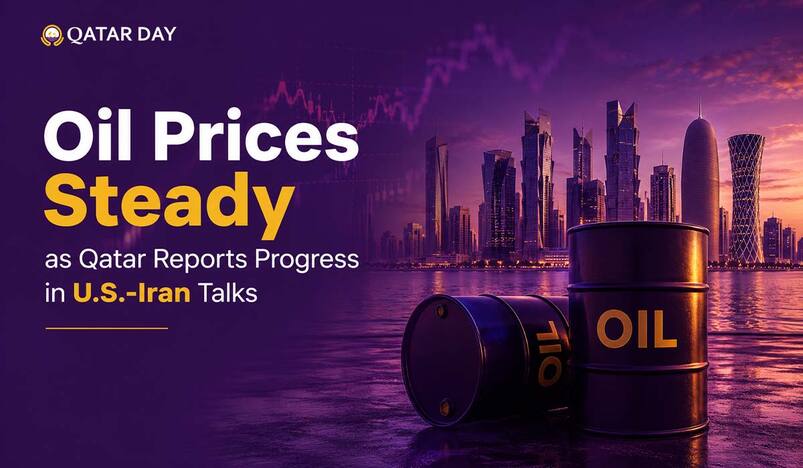
Oil markets showed little decisive movement this week following Qatar's announcement that the United States and Iran had made progress during indirect talks held in Doha, even as prices continued to hover near their lowest levels of the year.
Market Snapshot
International benchmark Brent crude futures for September delivery closed up slightly, adding a few cents to settle at $71.80 a barrel, while U.S. West Texas Intermediate futures for August delivery edged higher to $68.69. The muted reaction came despite reports of diplomatic headway, with both benchmarks trading not far from four-month lows reached earlier in the week — a sign that traders remain cautious about reading too much into any single round of talks.
Brent has posted its worst quarterly performance since early 2020, and prices are on pace for a fourth consecutive weekly loss, reflecting a market that has already priced in a significant de-escalation of Middle East tensions.
What Happened in Doha
Mediators from Qatar and Pakistan held separate meetings with U.S. and Iranian negotiators in the Qatari capital, with Qatar's Foreign Ministry confirming that the two sides had achieved what a spokesperson described as positive movement on matters tied to the memorandum of understanding that paused fighting between the countries. U.S. special envoy Steve Witkoff and Jared Kushner led discussions through Qatari intermediaries rather than meeting Iranian officials directly.
The renewed round of diplomacy followed a weekend flare-up in hostilities that had threatened to unravel a 60-day ceasefire: Iran struck two commercial vessels, prompting retaliatory U.S. strikes on targets inside Iranian territory. Despite the setback, negotiators returned to the table within days, underscoring both sides' apparent interest in preserving the fragile truce.
Qatar's Foreign Ministry indicated that the next round of talks would be scheduled after July 9, once funeral processions conclude for Iran's late Supreme Leader, who was killed in the earliest wave of strikes when the conflict began.
The Bigger Picture: Strait of Hormuz
At the heart of the negotiations is the status of the Strait of Hormuz, the narrow waterway between Oman and Iran that typically carries around one-fifth of global oil supply. Shipping through the strait, badly disrupted during the conflict, has been gradually recovering, with tanker traffic data showing dozens of vessels making confirmed crossings on a single day this week — split roughly evenly between inbound and outbound voyages.
That recovery has been the dominant force pulling prices down in recent weeks, arguably more so than the diplomatic headlines themselves. Analysts have noted that crude has fallen back toward levels last seen before the conflict began, despite more than 100 days of hostilities that had shut one of the world's most important shipping lanes.
Analyst Views Diverge
Not everyone agrees the market's optimism is fully justified. Strategists at ING have cautioned that oil traders may be moving too quickly to price in a full return to normal shipping volumes, suggesting the market has treated a temporary ceasefire as though it were a lasting settlement. Their view is that flows are unlikely to approach pre-war levels until closer to the end of the third quarter.
Others see room for prices to rebound once the current oversupply clears. HSBC has trimmed its Brent forecasts across the next several quarters, but expects the market to work through what it calls a temporary supply glut as strategic stock releases from the International Energy Agency wind down, which could support a move back toward $80 a barrel or higher.
Remaining Friction Points
Even with progress reported, unresolved issues remain. Iran has continued to assert control over the Strait of Hormuz, with its military command warning that any U.S. intervention in the waterway would face a swift response. Separately, reports have suggested Iran and Oman may be exploring a scheme to charge tolls on vessels transiting the strait — an idea U.S. officials have publicly rejected.
Talks are also expected to address the release of frozen Iranian assets, a sensitive component of the broader memorandum between the two countries.
*Prices and figures reflect trading data reported in early July 2026 and are subject to change as talks continue.*
.png)
.png)
_27-51-2026_11-51.png)
_27-43-2026_12-43.png)

_03-27-2026_08-27.jpg)
.jpg)


.jpg)
.jpg)



.jpg)


.jpg)
.png)
.jpg)













Leave a comment